

A regulator asks for a trend analysis across complaint categories. One institution produces it in minutes. Another needs two weeks and a spreadsheet. The difference isn’t the artificial intelligence (AI), it’s whether the AI can reach the data.
Strong compliance output depends on data spread across departments and platforms. Risk appetite, policies, exam history and vendor files often sit in separate systems, which is why the work has been so manual. And most compliance AI vendors are limited to the data sitting in their own platform.
The most sophisticated buyers already know this. They shrug at the AI demo. The prompts can be replicated and the model trained internally for far less. Their question isn’t, “How much AI do you have?” It’s, “How strong is your connector?”
That leads to something called a model context protocol (MCP) connector. This allows AI to securely pull and combine data across platforms without custom integrations. Think of AI as the engine. The MCP connector is the fuel line. A faster engine does nothing if the fuel can’t get to it.
A Regulatory Conversation
In April 2026, the Office of the Comptroller of the Currency, Federal Reserve and Federal Deposit Insurance Corp. jointly issued updated model risk management guidance addressing banks’ use of AI, including generative and agentic AI. When a regulator asks for an issue trend analysis, the institution that produces it in minutes from a connected platform looks fundamentally different from the one that returns weeks later with a spreadsheet. Data connectivity is becoming an exam readiness issue.
Put Into Practice
With a strong MCP connector, a compliance team can use its own Microsoft Copilot, Anthropic Claude or OpenAI environment to:
- Pull every open exam finding, audit issue and work record using the Jira ticket system into one prioritized remediation report.
- Generate a board-ready complaint trend analysis combining data from the compliance platform and the core system.
- Run vendor due diligence documents against the bank’s risk appetite and stored policies, and produce a scored risk assessment in minutes.
All three used to take days, but now, take just seconds. That’s not a better prompt. That’s better access.
Four Camps of Compliance Buyers
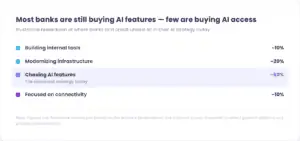
- Building internal tools (~10%). Homegrown exam trackers and audit logs were rarely built with AI interoperability in mind. The data is there but getting AI to reach it is the problem. Retrofitting typically costs more than migrating.
- Modernizing infrastructure (~20%). The foundation is being laid but gains like automated exam prep and AI-assisted vendor scoring are deferred.
- Chasing AI features (~60%). These teams buy aggressively, but here’s what nobody talks about: buying five AI tools that each touch one system doesn’t get closer to connectivity. It delays it. Leadership feels like it has solved AI and stops pushing for the architecture work that would make everything compound. Five AI tools, five dashboards and one very tired compliance analyst still copying data between them.
- Focused on MCP connectivity (~10%). These teams shrug at the demo. They want AI that reaches their complaint system, exam tracker, vendor platform and core simultaneously. They’ve figured out that many AI-first vendors are charging for a prompt wrapper on the bank’s own data. This is replicable internally for far less. They silently have the largest return on investment.
Questions To Ask Every Compliance Vendor
- Do they have a strong MCP connector with read and write capabilities across exam findings, complaints, vendor documents and policy records? Only a vendor with clean architecture will be able to say yes.
- Is it model-agnostic? The answer should be yes.
- How are models trained and on whose data?
Additionally, don’t mistake a polished demo for a connected system.
Compliance has always been a data problem as much as a process problem. AI could change that, but only if it can reach the data. With regulators now formally asking about AI governance, the institutions with clean data and strong connectors won’t just be more efficient. They’ll be more examinable. That’s the real advantage. The institutions getting ahead aren’t asking for more AI. They’re asking for better access.







 Previous